
by LINA GU
STAFF WRITER
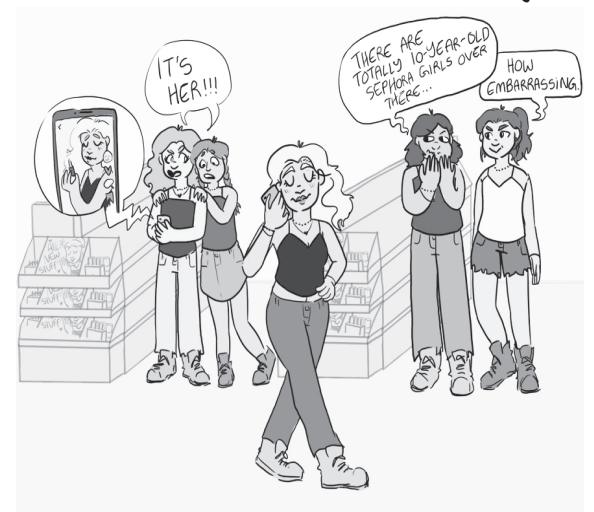
If you have ever taken a stroll through the aisles of your local Sephora, you might find yourself standing next to baby-faced kids decked out in the latest Lululemon workout set, rummaging through various Drunk Elephant skincare creams, Summer Friday lip products and watermelon-scented GlowRecipe dew-drop serums. Sephora, best known as the go-to cosmetics store for luxury
beauty products, has now been terrorized by the 10-year-old girls of Generation Alpha, the first to have grown up completely in the age of social media.
Watching these innocent and vulnerable “Sephora Kids” flock the aisles caused many adults to condemn the apparent loss of the tween, a term derived from the
word “between” to describe the demographic of someone not a child, but not a teenager.
On TikTok, many adults would record videos of the Sephora Kids and make fun of how ironic it is that little kids feel the need to stock up on the trendiest high-
end beauty products.
Most adults complain about kids wasting samples, being rude to employees, and spending large amounts of money on products for adults.
Especially since little kids have not yet experienced the lovely glories of puberty, their untouched, poreless skin really does not really need to be smothered by overpriced anti-aging creams.
In fact, multiple dermatologists have criticized the Sephora Kid for buying anti-aging products, as such products that have extreme acids that can harm the
gentle, baby-soft skin of a young girl.
Clearly, the Sephora Kid is actively being hated on by dermatologists, adults and TikTokers.
Yet, the tweens continue to proudly tramp on Sephora’s black-
and-white-tiled floors.
So, what is the root of this 10-year-old’s Sephora craze?
Oftentimes, it is easy to overlook the role that social media has on our daily lives. Millennials of Generation Y, teenagers of Generation Z, and now tweens of Generation Alpha live a life where using technology and social media has become routine and habitual.
Because social media consumes so much of our time, it has become normal to internalize trends. Most TikTok trends relate to makeup, hair and skincare.
That’s why I believe that instead of hopping on the hate train toward 10-year-old Sephora Kids, it’s important to realize that these kids have been raised with different cultural values … where social media trends have taken over their childhood.
Especially because Sephora Kids are essentially kids trying to grow up faster, they are a lot more vulnerable to adult topics. They see these beauty trends and don’t care to realize the future internal issues in place that can impact one’s self-esteem.
The online discourse about the Sephora Kids also shows the irony of adults on the internet. So many adults make fun of Sephora Kids for wanting to fol-
low the latest trends, yet adults also engage with those trends.
Adults perpetuate their popularity, which subsequently increases the desire for children to hop on the bandwagon. It’s basically a feedback loop.
Although the 10-year-olds of the Sephora phenomenon reflect the larger negative consequences of younger children shaping their childhoods around trends they see on social media, it is also just as necessary to have conversations about how adults can use their social media platforms in a more positive and productive light.
 The Mainsheet