

by LINA GU
SECTION EDITOR
In the fashion world, the Met Gala is like the Super Bowl. An event created to raise funds for the Metropolitan Museum of Art’s Costume Institute, the Met Gala takes place on the first Monday of every May to celebrate contemporary fashion, all while typically raising eight-figure sums.
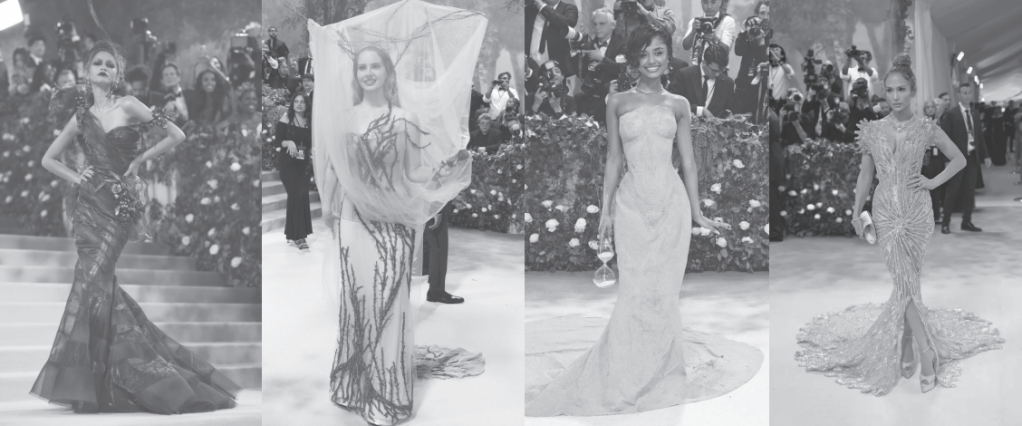
This year, the event generated $26 million, making it the most successful Met Gala in a history that dates to 1948. The Costume Institute introduced its 2024 exhibition, “Sleeping Beauties: Reawakening Fashion,” with a dress theme of “The Garden of Time.” The red carpet was bursting with many eye-catching floral and botanical outfits.
Vogue’s iconic Editor in Chief, Anna Wintour, has run the Met Gala since 1995, molding the standard of the extravaganza. Along with Wintour, other celebrities at the Gala included hosts Zendaya, Jennifer Lopez, Bad Bunny, and Chris Hemsworth. “We came up with the title ‘Sleeping Beauties’—it’s wonderful and poetic and romantic. But it actually could be many, many things,” Wintour said.
To reserve a ticket to the Met Gala, it costs $75,000. This extravagant fee puts into perspective how elite the attendees of the Gala are. The top-secret guest list consists of mostly A-list celebrities from the music, film, and fashion industries, all of whom are handpicked and approved by Wintour.
The Met Gala was originally launched by fashion publicist Eleanor Lambert. Lambert created the first Costume Institute Fundraiser, charging $50 a ticket. During this time period, events were located in the Met’s basement. They were simple, chic, and targeted New York’s high society.
Starting around the 1970s, the Gala evolved into a more global and glamorous affair. In 1973, the first theme was designated: “The World of Balenciaga.” Since then, the Met Gala has exported boundary-pushing fashion.
“What makes the Met Gala so interesting is just everyone’s takes,” says Chadwick junior Noah Matsunaga, who has been a Met Gala fanatic since an early age. “It’s just fun to be able to see all the different ways that people interpret the theme, or how they want to express themselves.”
The Met Gala has grown from a simple, intimate party to a celebrity-filled costume celebration, but always with the same goal of raising money for the Costume Institute. At this point, the Met Gala remains an international phenomenon that is loved by many, and for a very good reason.
General public attendees are to follow a strict no-phone and no-social-media rule. Some outsiders criticize the exclusivity and elitism that come with the strict guidelines. Still, many others argue that social media has democratized the fashion industry by making invite-only events more accessible.
Other controversies surrounding the Met Gala in prior years include the lack of commitment to following the dress code. Many celebrities showed up to the event disregarding the theme that had been carefully placed, angering some traditional followers.
“I think what makes the Met Gala special, though, is that it’s always been a celebration of creativity and fashion,” says distinguished fashion designer Tom Ford. “Even though the Gala has transformed itself into an over-the-top, high-fashion show, many observers have criticized its recent versions. It’s turned into a costume party that used to just be very chic people wearing very beautiful clothes going to an exhibition about the 18th Century.”
Ford stands clear in his critique of the Met’s decaying elegance. Contrasting Ford’s opinions, however, others believe that the eccentric notion of the Met Gala has helped in the marketing of the event. Today, what happens inside the Met Gala is not disclosed to the general public.
 The Mainsheet