

by ABBY COE-SULLIVAN
STAFF WRITER
As summer ends, it’s a special time of the year … and I’m not just talking about the start of school. In early October this year, the most important Jewish holidays begin, called the High Holidays. Usually when people think of major Jewish holidays, Hanukkah is the first on their list. This is a common misconception, because it exists at the same time as the major Christian holiday. In fact, 87% of the students I surveyed didn’t understand or had never even heard of the High Holidays. When asked to define them in a survey, the answers varied from “I know that it is an umbrella term for the Jewish Holidays, but that’s all I know” to the ever-polite “no idea” … no punctuation required.
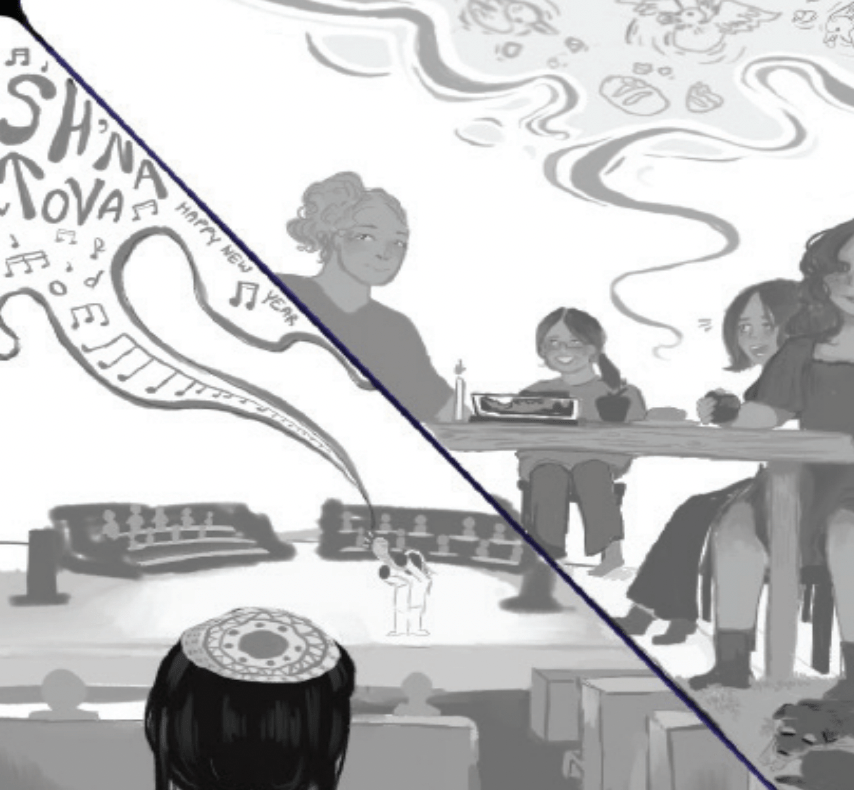
The High Holidays, or High Holy Days, consist of three celebrations: Rosh Hashanah, Teshuva, and Yom Kippur. Rosh Hashanah, meaning “head of the year” in Hebrew, usually consists of a sunset service at a synagogue. In my family, Erev Rosh Hashanah, or the day before Rosh Hashanah, is like Christmas Eve. We go to services and usually have a special dinner, including all of our favorites, such as matzo ball soup and my great-grandmother’s honey cake.
A universal High Holiday snack is apples dipped in honey, called tapuchim u’dvash, which symbolizes a sweet new year. The day of Rosh Hashanah is full of joy. We open the service by sounding the shofar, a ceremonial musical instrument carved from a ram’s horn. The shofar announces to the world that the year has begun, and its beautiful and haunting sound always marks the true beginning of the holidays for me.
Another Rosh Hashanah tradition is tashlich, a ceremony in which we tear pieces of bread and throw them into any body of running water, such as our favorite, the ocean. The bread symbolizes our wrongdoings, or parts of the last year we don’t wish to keep with us. By casting them out, we create a clean slate to enter the new year.
After the celebration of Rosh Hashanah comes the reflection of Teshuva, also known as Yamim Noraim, the first 10 days of the lunar calendar year. These days are spent making amends with—and seeking forgiveness from—all people you’ve wronged in the past year. Teshuva is about “keeping my side of the street clean,” as Taylor Swift would say.
In Jewish culture, there are three levels of forgiveness: first, forgiveness from the person you’ve wronged; then, forgiveness from G-d, usually by prayer or promising to improve in the future; and finally, forgiveness from yourself, sometimes the most difficult kind.
Finally, after 10 days of Teshuva comes the big finale: Yom Kippur. As soon as the sun rises, we go to synagogue to pray … and to fast. Fasting on Yom Kippur symbolizes cleansing yourself of the problems of the last year. It is a time of spirituality, full of songs, dances, and beautiful clothes. In my family, we dress up in our nicest dresses and suits and wear tallit, prayer shawls, and kippot, commonly called yarmulkes.
After the fast comes the most important meal in all the Jewish year: Break Fast! Break Fast is a meal that, you guessed it, breaks the fast. My family hosts most years, and it is a wonderful chaos of grandparents, cousins, and friends. We feast on bagels and lox, kugel, matzo ball soup, brisket, honey, and apple cake. Senior Lilly Green, when asked for her favorite part of the holidays, said simply, “Breakfast Dinner!!!!” Wearing fancy, formal clothes and thinking all day about how to be better people works up an appetite for sure.
So, next time you see your Jewish friends, try wishing them “Sh’na Tova” or “Happy New Year.” This is a beautiful time of celebration, reflection, and joy for the Jewish community. Remember to treat your friends with kindness and patience, especially if they’re fasting.
Happy Holidays!
As summer ends, it’s a special time of the year … and I’m not just talking about the start of school. In early October this year, the most important Jewish holidays begin, called the High Holidays. Usually when people think of major Jewish holidays, Hanukkah is the first on their list. This is a common misconception, because it exists at the same time as the major Christian holiday. In fact, 87% of the students I surveyed didn’t understand or had never even heard of the High Holidays. When asked to define them in a survey, the answers varied from “I know that it is an umbrella term for the Jewish Holidays, but that’s all I know” to the ever-polite “no idea” … no punctuation required.
The High Holidays, or High Holy Days, consist of three celebrations: Rosh Hashanah, Teshuva, and Yom Kippur. Rosh Hashanah, meaning “head of the year” in Hebrew, usually consists of a sunset service at a synagogue. In my family, Erev Rosh Hashanah, or the day before Rosh Hashanah, is like Christmas Eve. We go to services and usually have a special dinner, including all of our favorites, such as matzo ball soup and my great-grandmother’s honey cake.
A universal High Holiday snack is apples dipped in honey, called tapuchim u’dvash, which symbolizes a sweet new year. The day of Rosh Hashanah is full of joy. We open the service by sounding the shofar, a ceremonial musical instrument carved from a ram’s horn. The shofar announces to the world that the year has begun, and its beautiful and haunting sound always marks the true beginning of the holidays for me.
Another Rosh Hashanah tradition is tashlich, a ceremony in which we tear pieces of bread and throw them into any body of running water, such as our favorite, the ocean. The bread symbolizes our wrongdoings, or parts of the last year we don’t wish to keep with us. By casting them out, we create a clean slate to enter the new year.
After the celebration of Rosh Hashanah comes the reflection of Teshuva, also known as Yamim Noraim, the first 10 days of the lunar calendar year. These days are spent making amends with—and seeking forgiveness from—all people you’ve wronged in the past year. Teshuva is about “keeping my side of the street clean,” as Taylor Swift would say.
In Jewish culture, there are three levels of forgiveness: first, forgiveness from the person you’ve wronged; then, forgiveness from G-d, usually by prayer or promising to improve in the future; and finally, forgiveness from yourself, sometimes the most difficult kind.
Finally, after 10 days of Teshuva comes the big finale: Yom Kippur. As soon as the sun rises, we go to synagogue to pray … and to fast. Fasting on Yom Kippur symbolizes cleansing yourself of the problems of the last year. It is a time of spirituality, full of songs, dances, and beautiful clothes. In my family, we dress up in our nicest dresses and suits and wear tallit, prayer shawls, and kippot, commonly called yarmulkes.
After the fast comes the most important meal in all the Jewish year: Break Fast! Break Fast is a meal that, you guessed it, breaks the fast. My family hosts most years, and it is a wonderful chaos of grandparents, cousins, and friends. We feast on bagels and lox, kugel, matzo ball soup, brisket, honey, and apple cake. Senior Lilly Green, when asked for her favorite part of the holidays, said simply, “Breakfast Dinner!!!!” Wearing fancy, formal clothes and thinking all day about how to be better people works up an appetite for sure.
So, next time you see your Jewish friends, try wishing them “Sh’na Tova” or “Happy New Year.” This is a beautiful time of celebration, reflection, and joy for the Jewish community. Remember to treat your friends with kindness and patience, especially if they’re fasting.
Happy Holidays!
 The Mainsheet