
by WRIGLEY ZBYSZEWSKI
EDITOR IN CHIEF
In and outside the classroom, life is looking a little different at Chadwick this year.
From no phones to new carpool rules, the student experience has undergone some major changes. Most of these changes are the result of a new campaign by the administration to promote student wellness, change the Chadwick culture, and address new problems posed from outside the school. The most controversial and arguably most impactful policy on the student body is the new cellphone policy. A few weeks before the start of the school year, the Chadwick community received an update from Head of the Upper School Cotter Donnell about Chadwick’s change in tolerance surrounding cellphones on campus.
In his email, Donnell announced, “We are implementing a new policy to make the Upper School a smartphone-free environment. Research shows that reducing screen time can significantly improve student focus, social interactions, and overall well-being. We are committed to creating an atmosphere prioritizing meaningful connections and fostering a healthier school culture.” More specifically, the new policy outlines that cellphones are not allowed out on campus from 7:50 a.m. to 2:40 p.m. Chadwick added “phone lockers,” plastic lockboxes with corresponding keys that students are supposed to carry around during the day, in Roessler. While almost none of the students use these containers, the campus has still seen a relatively successful execution of the policy.
Many of the changes brought to Chadwick’s campus this year, including the new cellphone policy, were driven by an ambitious proposal made by Dean of 11th and 12th Grades, Patrick Wallace. “Trend lines such as isolation, less social connection, less connection to adults on campus, and less overall well-being have been tracking in the wrong direction for years,” Wallace said. “We wanted to push back on those trend lines that are happening, and maybe we’ll be wrong and it won’t go well. But the status quo was not moving us where we wanted to go. Let’s change that.”
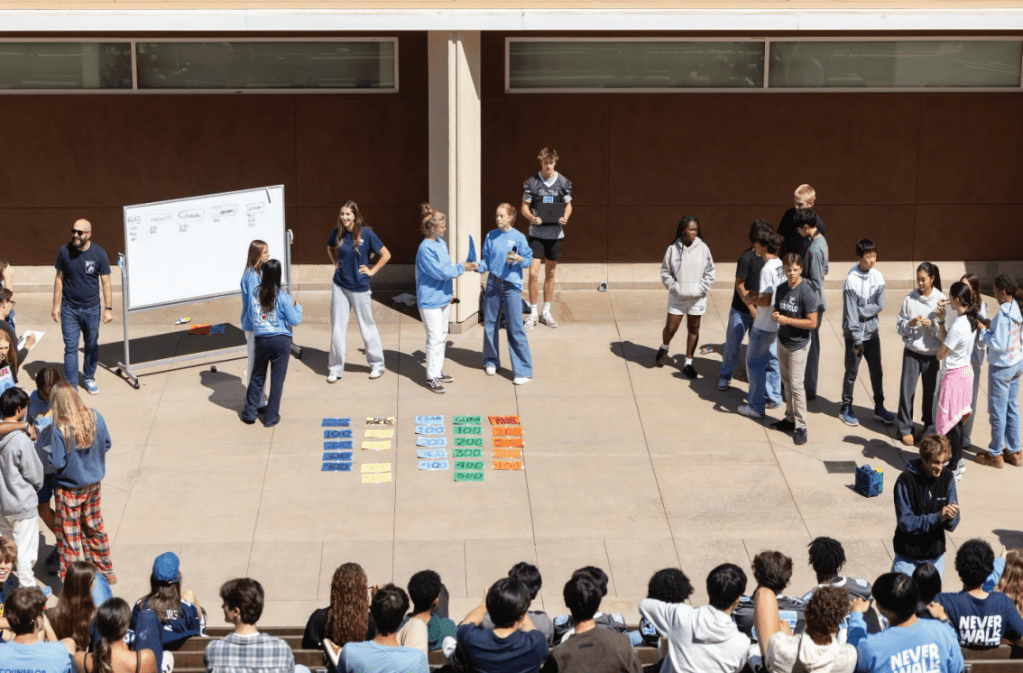
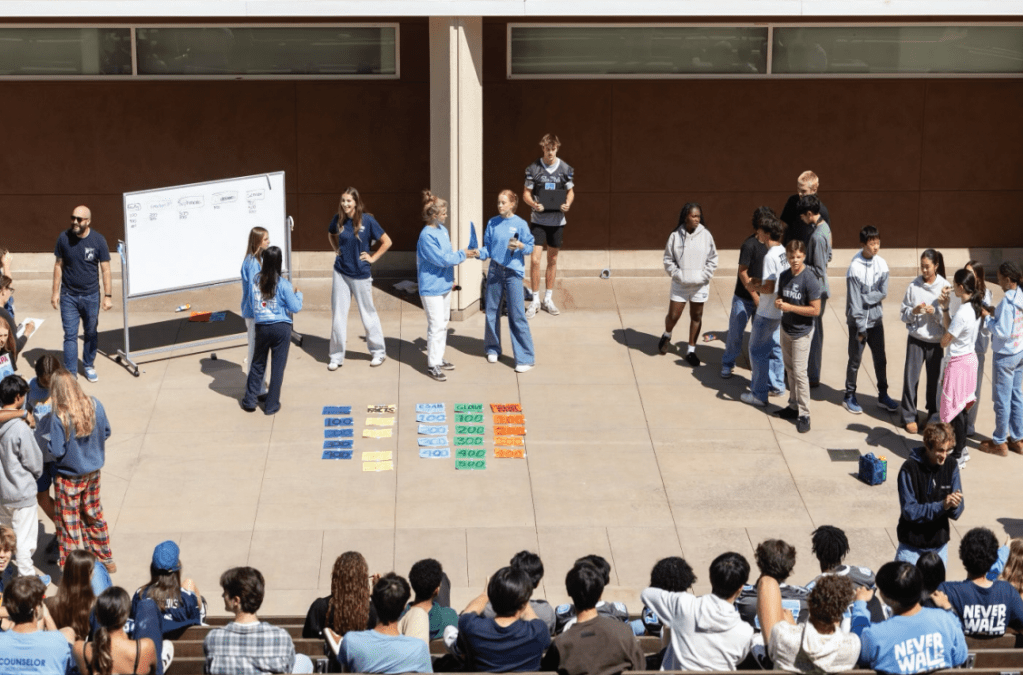
Efforts to bond the community, such as the new cellphone policy, are also reflected in the new changes to the Upper School weekly schedule. “I’m not in love with the new restrictive policies, but what they’re doing to make up for it with Community Connections and Friday Social has been a positive trade off for what we’re losing,” one senior said. The addition of Community Connections every Thursday guarantees unstructured recreational time for both students and faculty to bond on the Main Lawn. Other times, like Friday Social, are more organized, where each week a new student group leads an Upper School-wide activity.
“We really want to layer in different options and experiences that elevate the sense of community and wellness,” Wallace said. “For Friday Social, we want to see how the first several weeks go and ask ourselves about how the student body, as they get into the thick of classes, grades and tests, will grapple with the temptation to go study rather than spending time together. Sustainability is going to be the biggest task to make sure that everyone continues to do what they should–or at least try to–for their wellness.”
Wallace’s thoughts about the balance between academics and social life bring up the natural next major change that students are grappling with: a new year-long grading system. Traditionally, Chadwick functions on the semester system for academics. At the end of December, students take a series of finals, then receive a final fall semester grade. The same is done in the spring, usually in late May and early June. This year, however, the administration eschewed the typical grading system, giving just one cumulative grade at the end of the year.
Erin Nordlund, Director of Teaching and Learning on campus, announced the change in an email to the Upper and Middle School over the summer. “A yearlong grading system is designed to help ensure that the final grade on your transcript accurately represents your progress and development over the entire academic year,” Nordlund wrote. “This is because it takes into account your performance over a longer period of time, rather than just a few tests or months. This revised model also provides a more balanced evaluation by mitigating the effects of any unusual grades, absences, setbacks or other anomalies.”
This major academic development arrived along with a few other changes. The Math Department decided to officially eradicate the Transfer section in its grading breakdown, which used to be weighted similarly to the other categories—Procedural Fluency, Conceptual Understanding, and Application—but this year is absent from the grading criteria. The introduction of yearlong grading also raises questions about the traditional Finals Week at the end of the fall semester. Without major progress grades coming out that depend on these finals—which usually make up 15-20% of a student’s grade—many teachers are considering dropping these assessments (a popular campaign among the students).
“I think that the Upper School changes are different, but that doesn’t mean they’re bad,” ASB President Natalie Bernstein said. “The initial communication–an email over the summer–about the new initiatives was abrupt and definitely struck a negative chord among Upper School Students. However, once we got the chance to talk to Mr. Wallace, my hope is that it made people more comfortable. The truth is, a lot of people don’t agree with the changes. Some people inevitably use their phones on campus or leave school early, but I have seen positive changes on campus. The core is that these changes are made for bettering the community, not worsening it. As hard as it is to believe, we’ve got to keep that in mind.”
Added Wallace: “You tell me the last time you saw this much laughter, face-to-face engagement, playing, having fun, and connecting with each other. I’d have to go back to, maybe, never.”
 The Mainsheet